
Why we built YeahApp
Civil society runs on organisations that punch above their resources. Associations, alumni networks, professional bodies, NGOs, volunteer collectives, faith groups. They keep members, run events, collect dues, and hold records that have to survive a change of committee. Almost all of them do it on software built for something else.
Civil society runs on organisations that punch above their resources. Associations, alumni networks, professional bodies, NGOs, volunteer collectives, faith groups. They keep members, run events, collect dues, and hold records that have to survive a change of committee. Almost all of them do it on software built for something else.
The market hands these organisations two poor options. Content platforms that treat a community as an audience to grow. And enterprise systems that model an organisation properly but were designed for corporations, priced and configured to match. Neither fits a network that takes its operations seriously yet runs on a handful of people and a small budget.
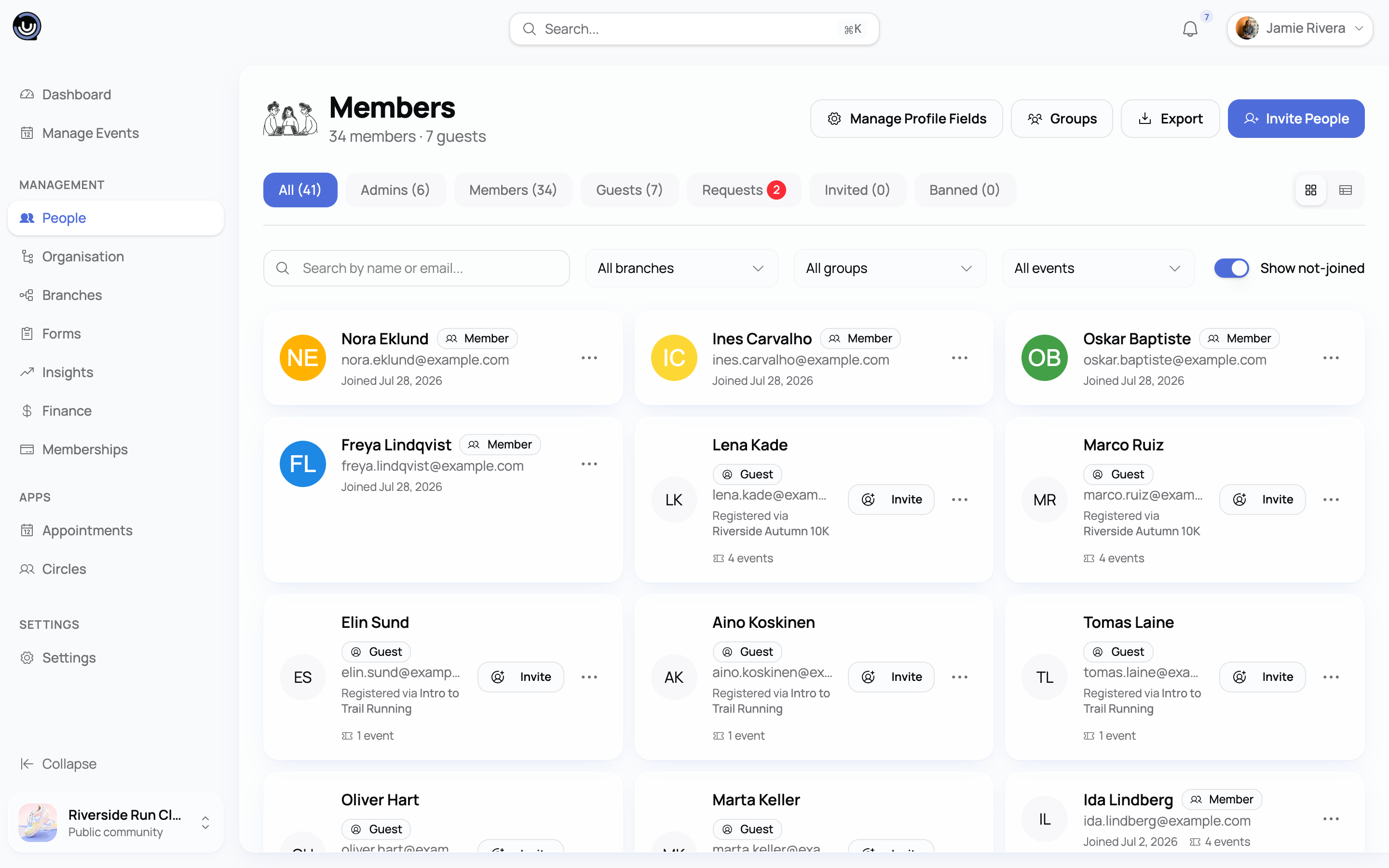
YeahApp is built for that middle. It models what these organisations actually do, membership, events, dues, roles, branches, reporting, as one connected system, so the whole operation runs from one place instead of a stack of tools that don't talk to each other.
A few principles hold it together.
The member directory belongs to the community, not to the platform. Your members are your records, and the job is to keep them well, not to hold them hostage.
Language is part of the design. We say members, not users. We say manager, not operator. The words reflect what these are: real people in real organisations, run by people doing real work, not an audience to be monetised.
And it's shaped around how the work actually happens. A registration updates the directory. A check-in logs attendance. A dues payment changes a status. The administration becomes a byproduct of running the community instead of a second job stacked on top of it.
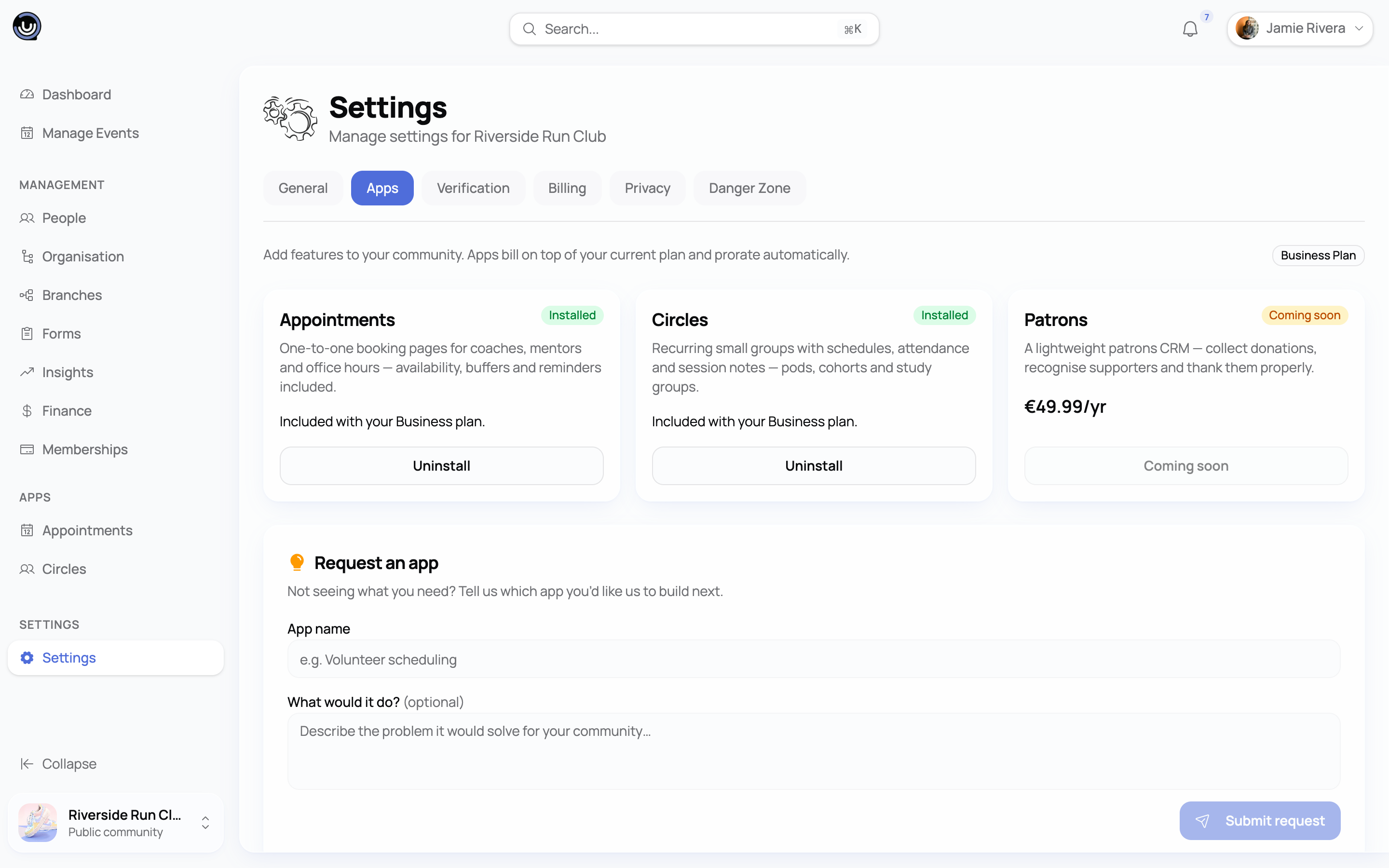
This is a starting point, not the finished picture. YeahApp already extends through a marketplace of add-on apps, so a community can add the specific tools it needs, like scheduling or a patrons CRM, on top of what its plan already includes. More apps will follow, built for the same kind of organisation.
If that's the kind of organisation you run, it was built for you.
Schedule a demo with us and we'll show you how it maps to the way you already work.